Redesigning Stanford’s Merchandise Service
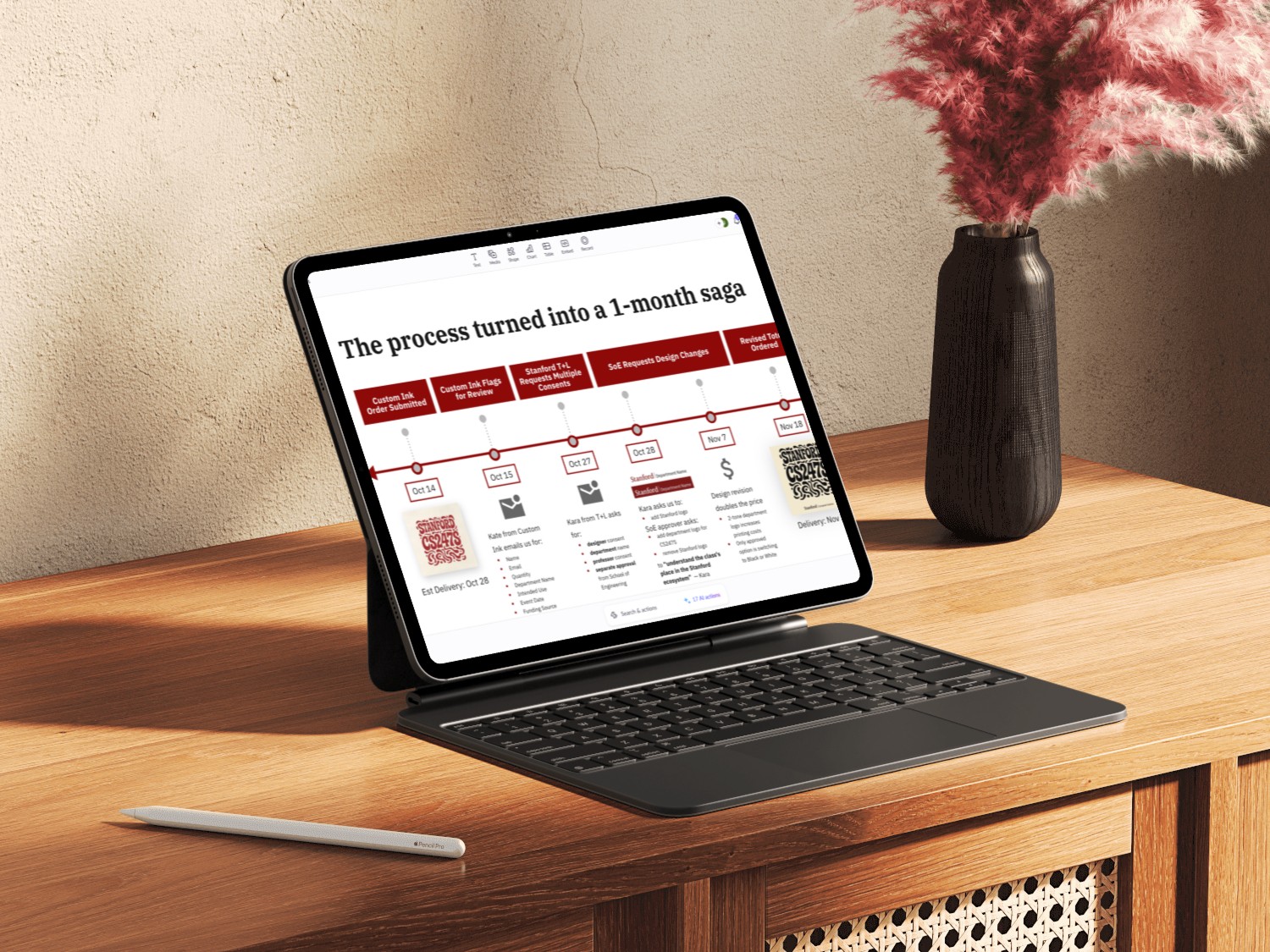
As part of CS247S Service Design at Stanford, I led a team project reimagining Stanford’s merchandise ordering and approval system. Students and staff regularly struggle with complex branding rules, unclear asset access, and opaque approval workflows, leading to guesswork, repeated revisions, and unnecessary workload for the Trademark and Licensing team. Our objective was to understand the system end to end and design interventions that reduce friction while protecting brand integrity.
We conducted a full service design process, interviewing over fifteen stakeholders across students, staff, designers, and licensing administrators. We mapped actor relationships, user journeys, and internal approval blueprints to surface systemic breakdowns. From these insights, we framed opportunity areas and developed tested prototypes addressing guided creation, process visibility, and structured feedback. The work concluded with a presentation to university leadership, with recommendations now moving toward implementation.
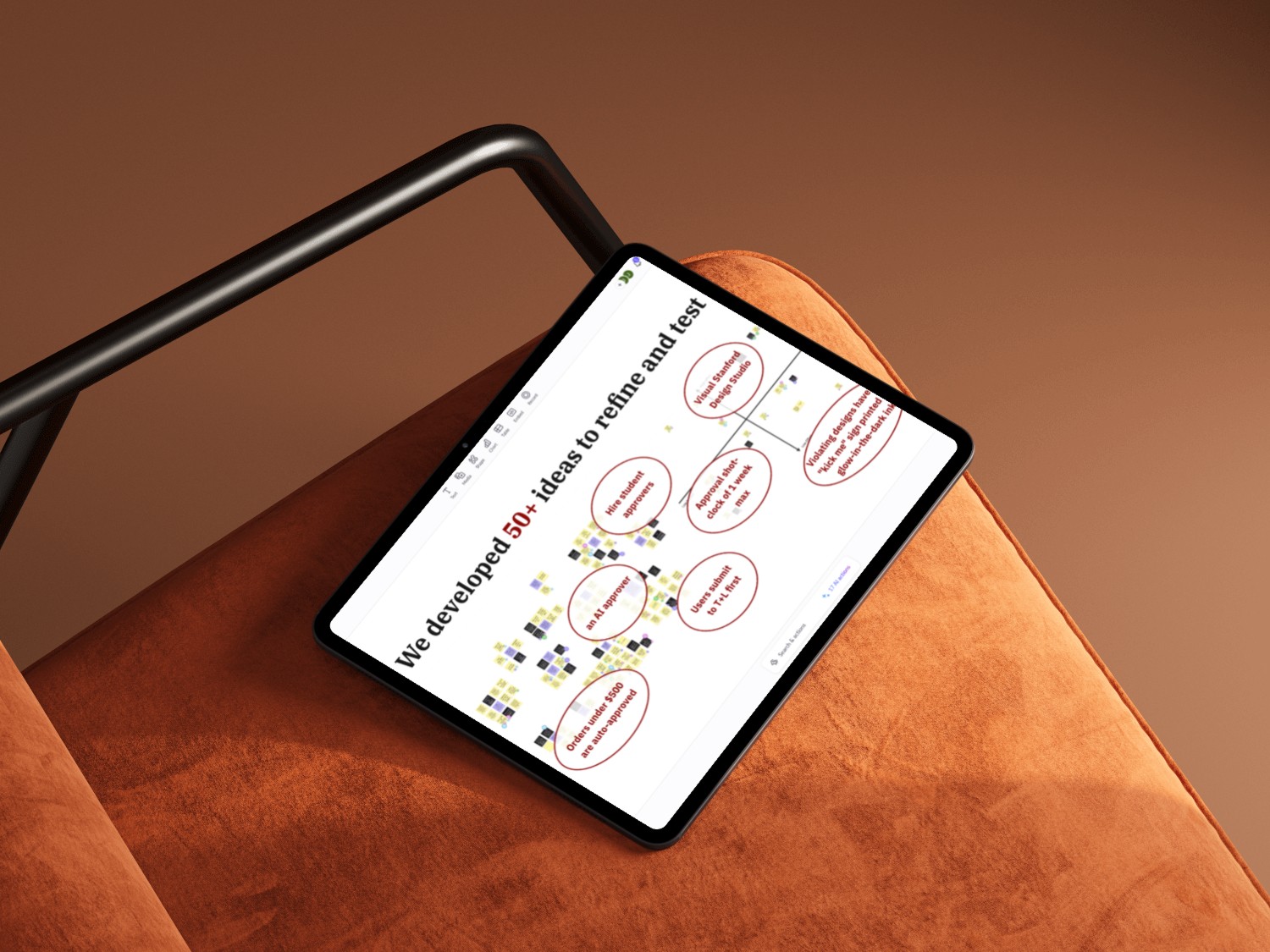
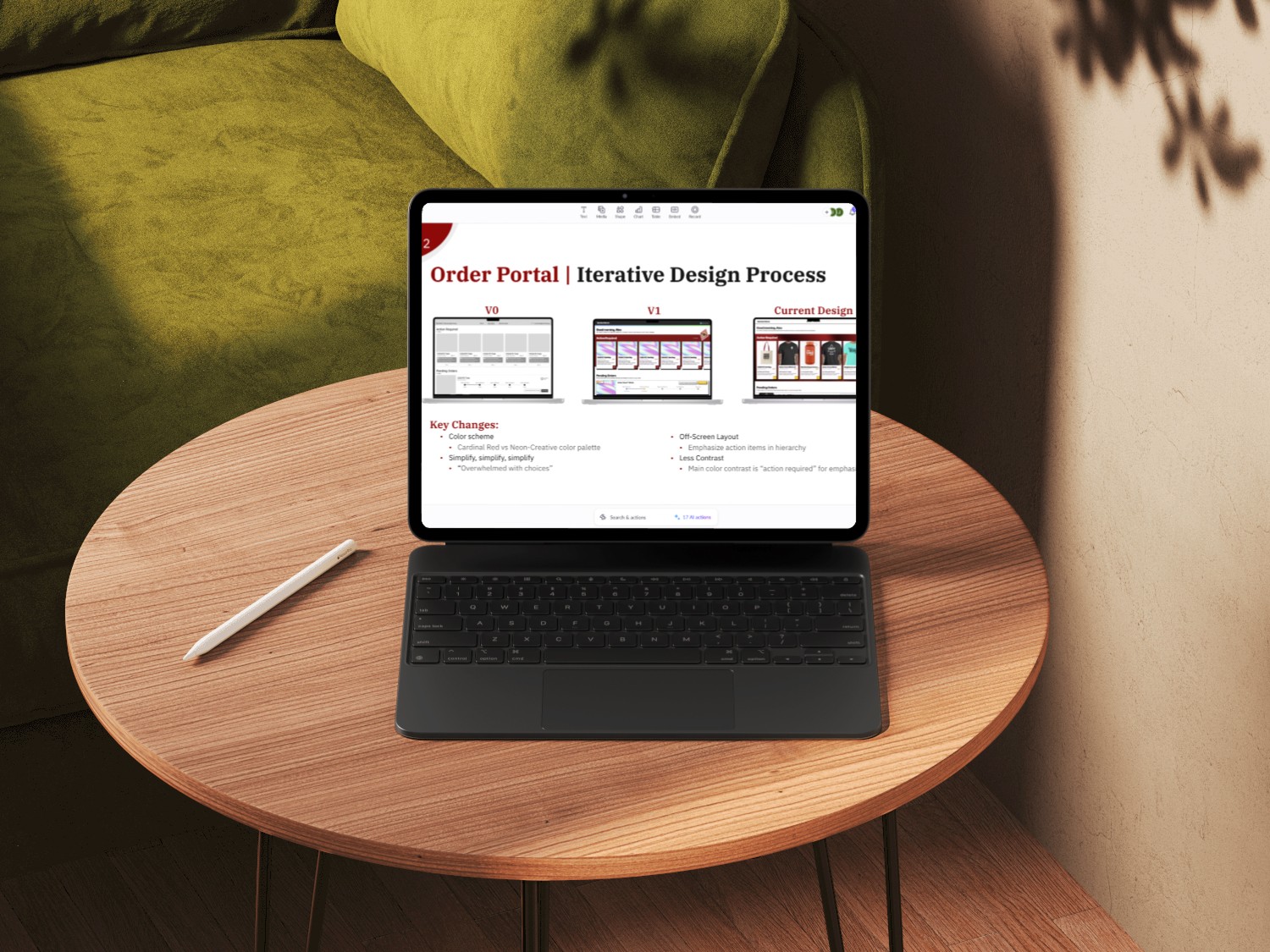
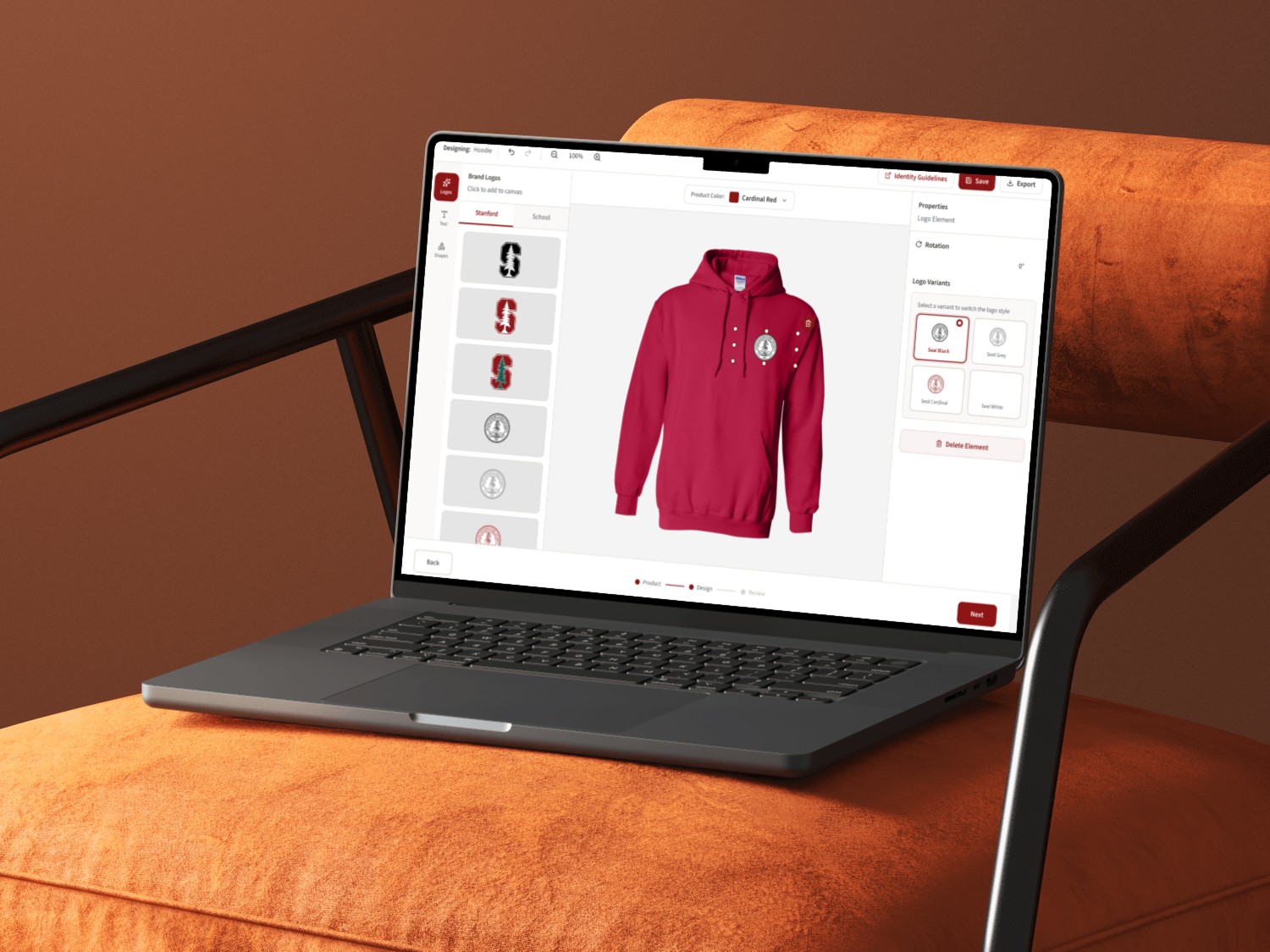
The central proposal was a guided merchandise creation tool called the Stanford Merchandise Studio. Official brand assets, approved color systems, and contextual guidance are embedded directly into the design environment, allowing users to produce compliant merchandise from the start. A clear flow from product selection to submission replaces dense policy documents and reduces reliance on manual oversight.
Prototypes were evaluated through rapid experiments, including design system trials and AI guided feedback simulations. Participants completed tasks faster, made fewer violations, and produced submissions that licensing staff described as easier to review. The project reflects my broader practice of using design to clarify complex systems and build tools that empower users while strengthening the ecosystems around them.