Ethnographic Needfinding with Mechanics
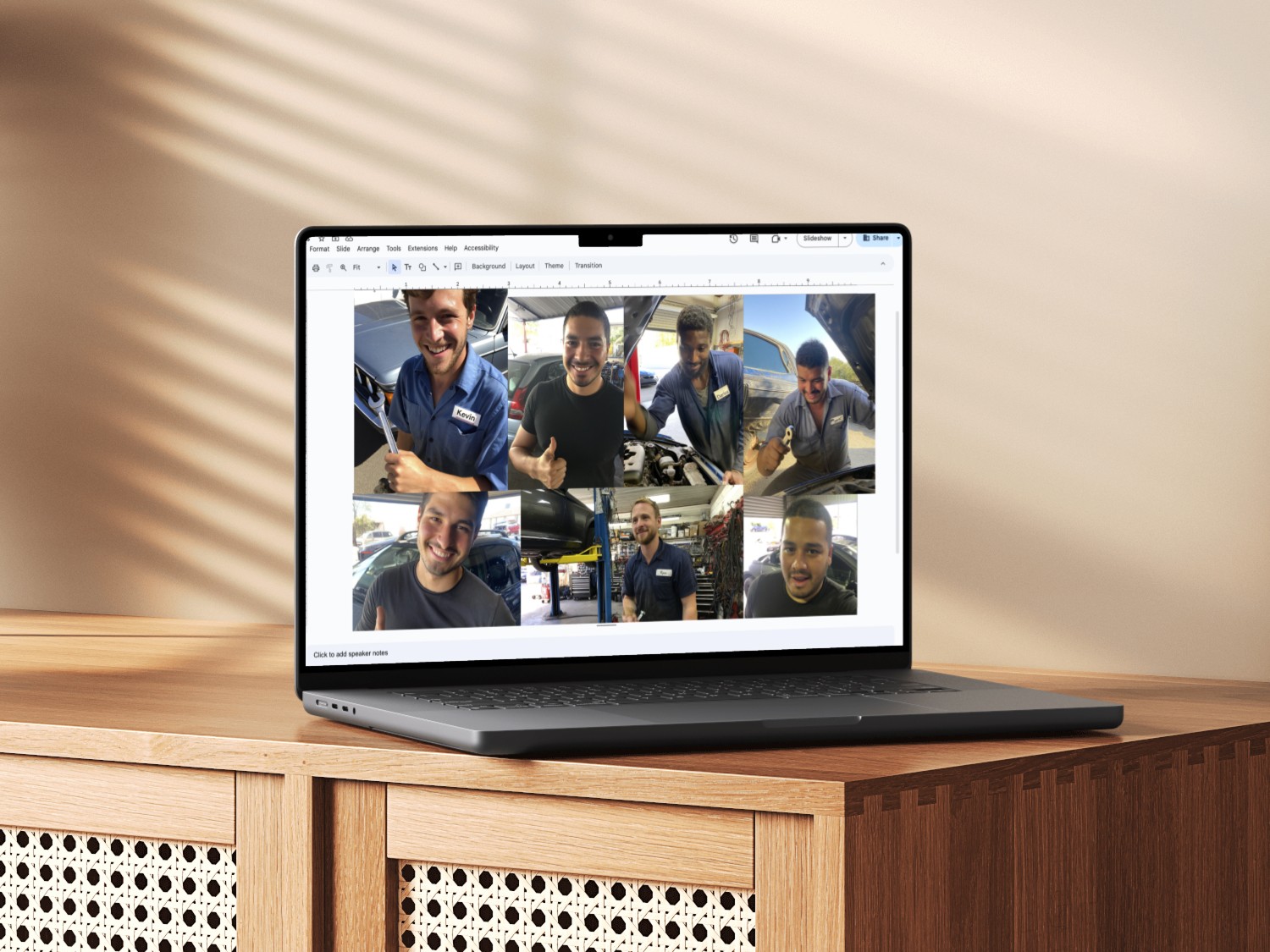
This project was conducted as part of DESIGN131 at Stanford, a course that pioneered structured needfinding and ethnographic research methods for design. I investigated independent automotive repair shops in Palo Alto, spending extended time observing mechanics at work, conducting semi structured interviews, and documenting workflows, communication patterns, and spatial organization. The goal was not to design a solution immediately, but to deeply understand lived experience, motivations, and unspoken tensions within a complex technical trade.
Across two specialized shops, I interviewed senior and junior mechanics and shadowed them during real diagnostic and restoration tasks. I captured handwritten field notes and interview transcripts, then synthesized observations using AEIOU frameworks, thematic coding, and triangulation across contexts. The research revealed a shared self concept among mechanics as hybrid engineers and craftspeople, alongside a persistent gap between their technical mastery and external recognition. This phase sharpened my ability to listen, ask why repeatedly, and extract meaning from subtle behavioral and environmental cues.
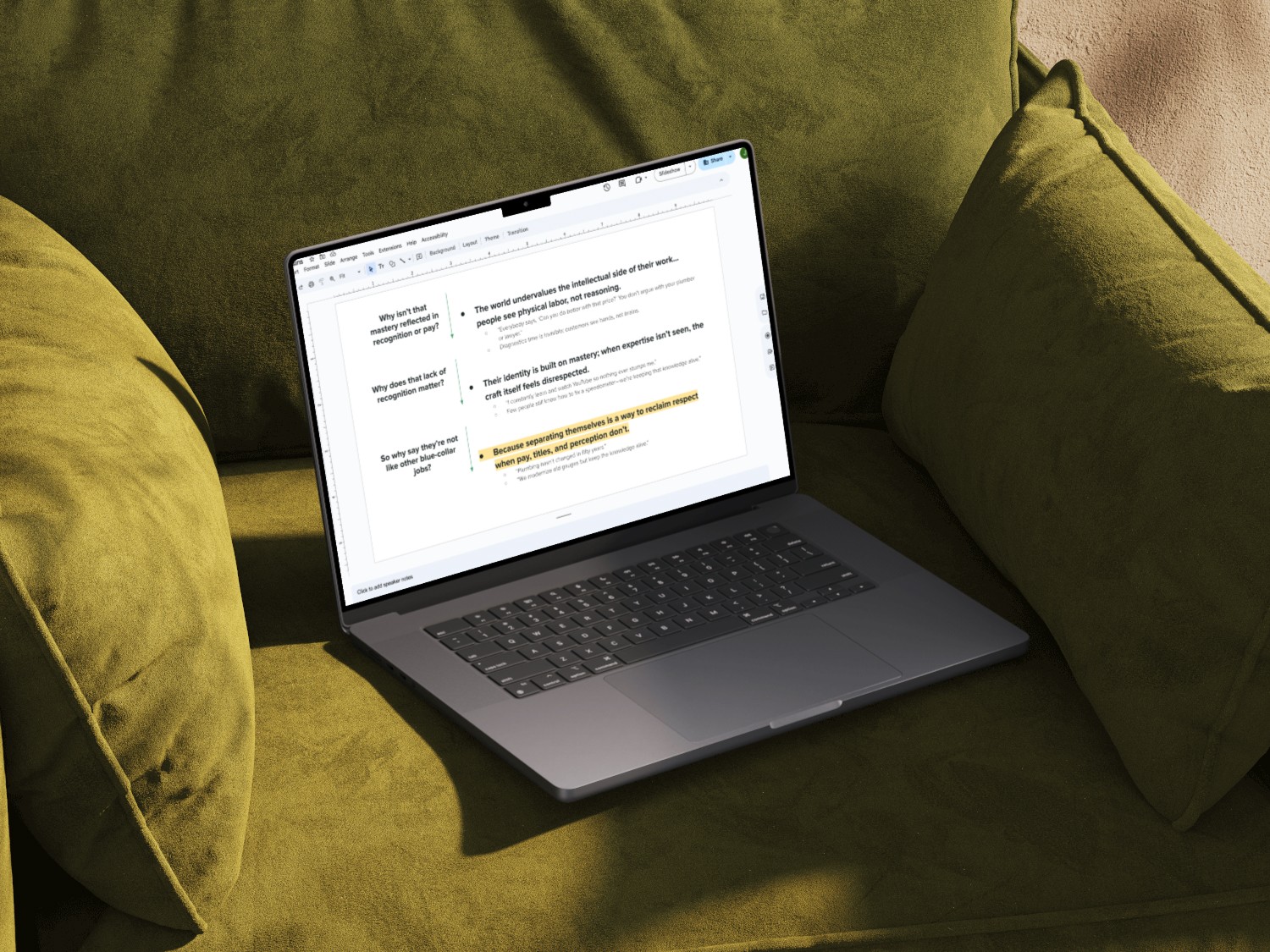
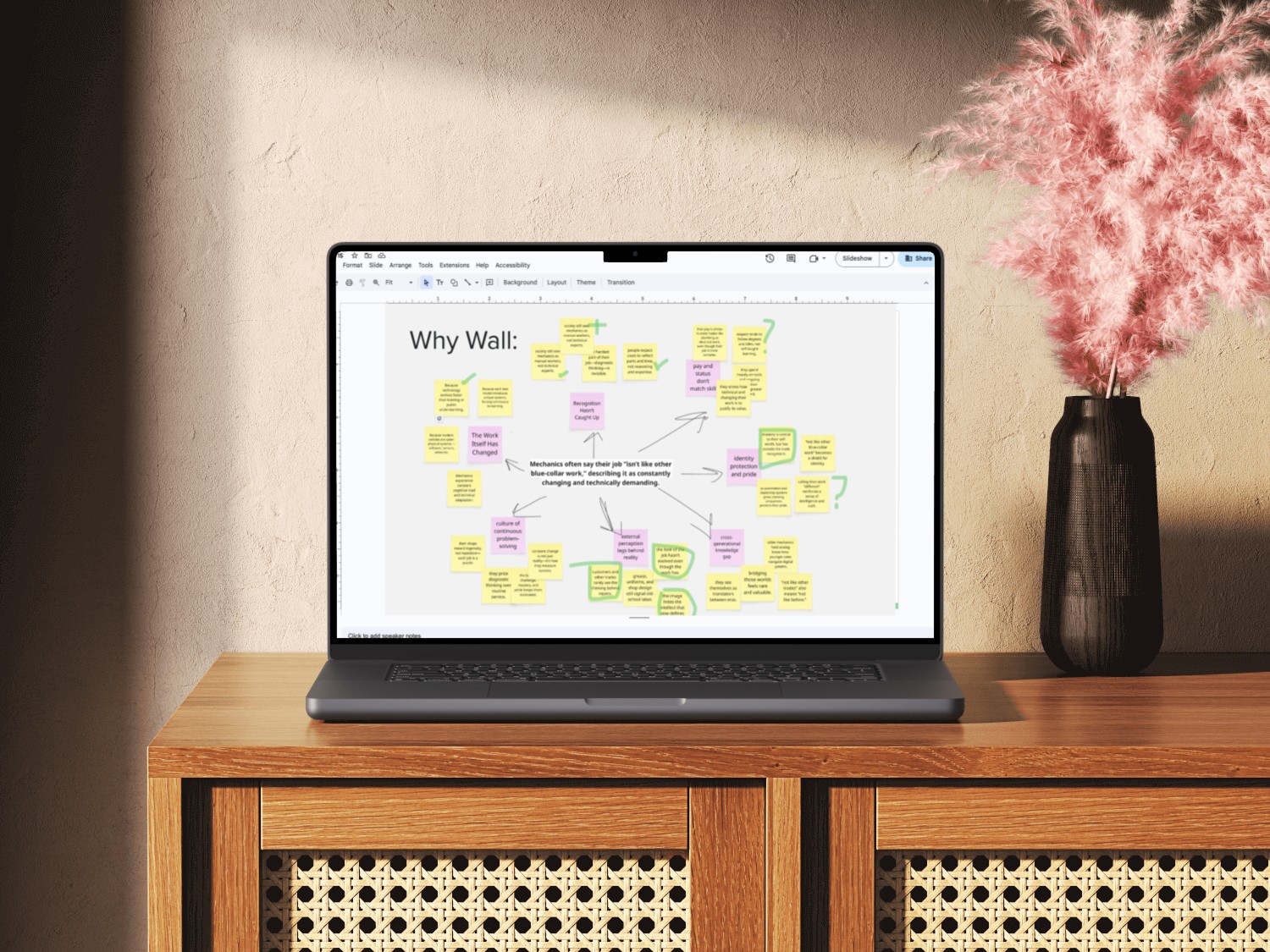
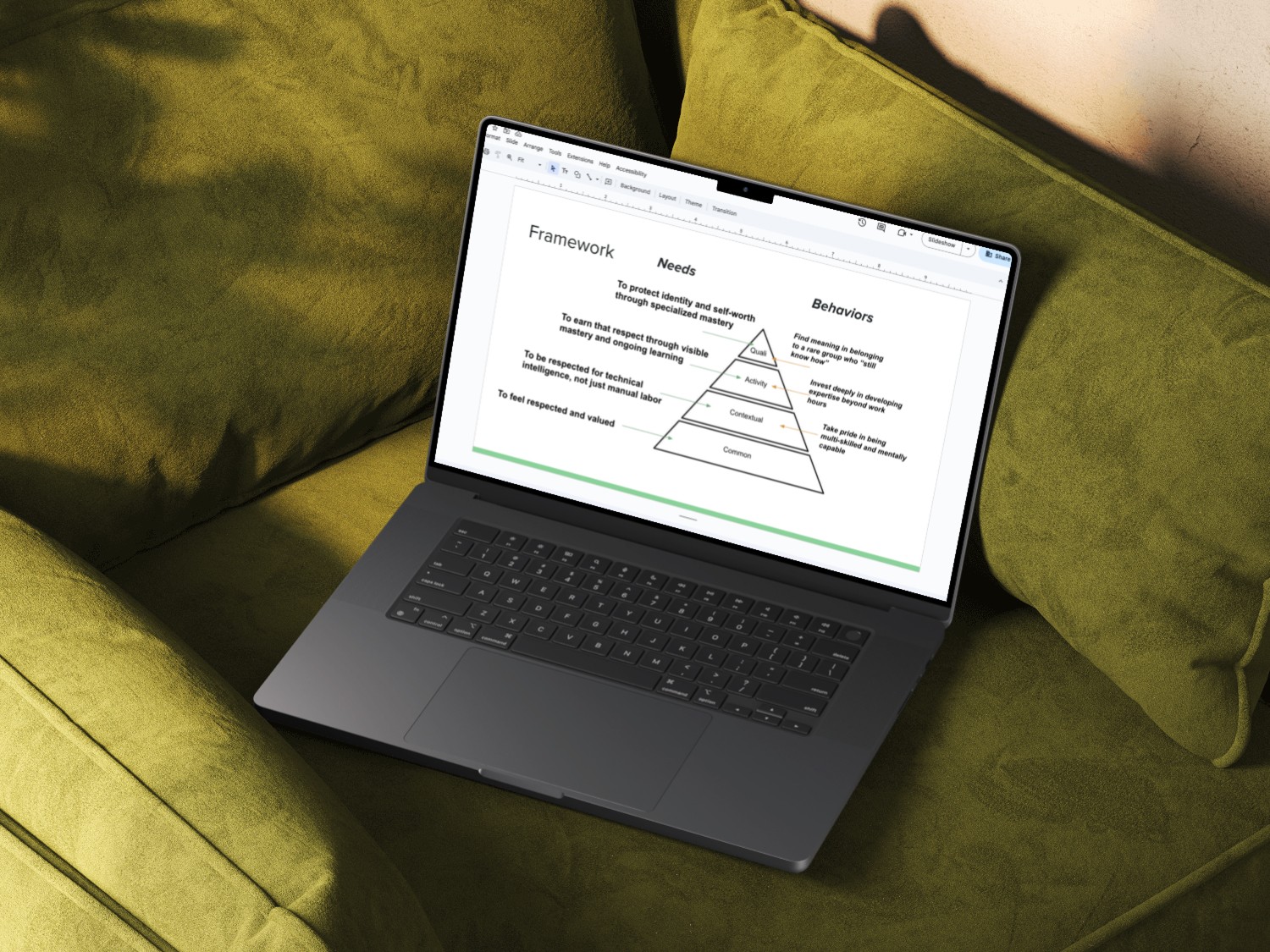
In the second phase, I translated raw observations into structured insight frameworks. I built needs hierarchies, mental model maps, and framing diagrams to articulate how mechanics construct identity through mastery, learning, and preservation of rare knowledge. These frameworks exposed invisible labor in diagnostic reasoning and restoration work, and highlighted tensions between technological evolution, customer perception, and pride in craft. The attached slides show examples of these synthesized models and narrative mappings from my final presentation.
I then extended the research into a subsequent design exploration, applying these insights toward potential interventions around recognition systems, knowledge preservation, and visibility of invisible technical work. This project deepened my appreciation for ethnographic research as a storytelling practice, pairing naturally with my background in documentary film. More importantly, it strengthened my ability to move from human observation to structured insight, and from insight to design direction, grounding creative decisions in lived reality rather than assumption.